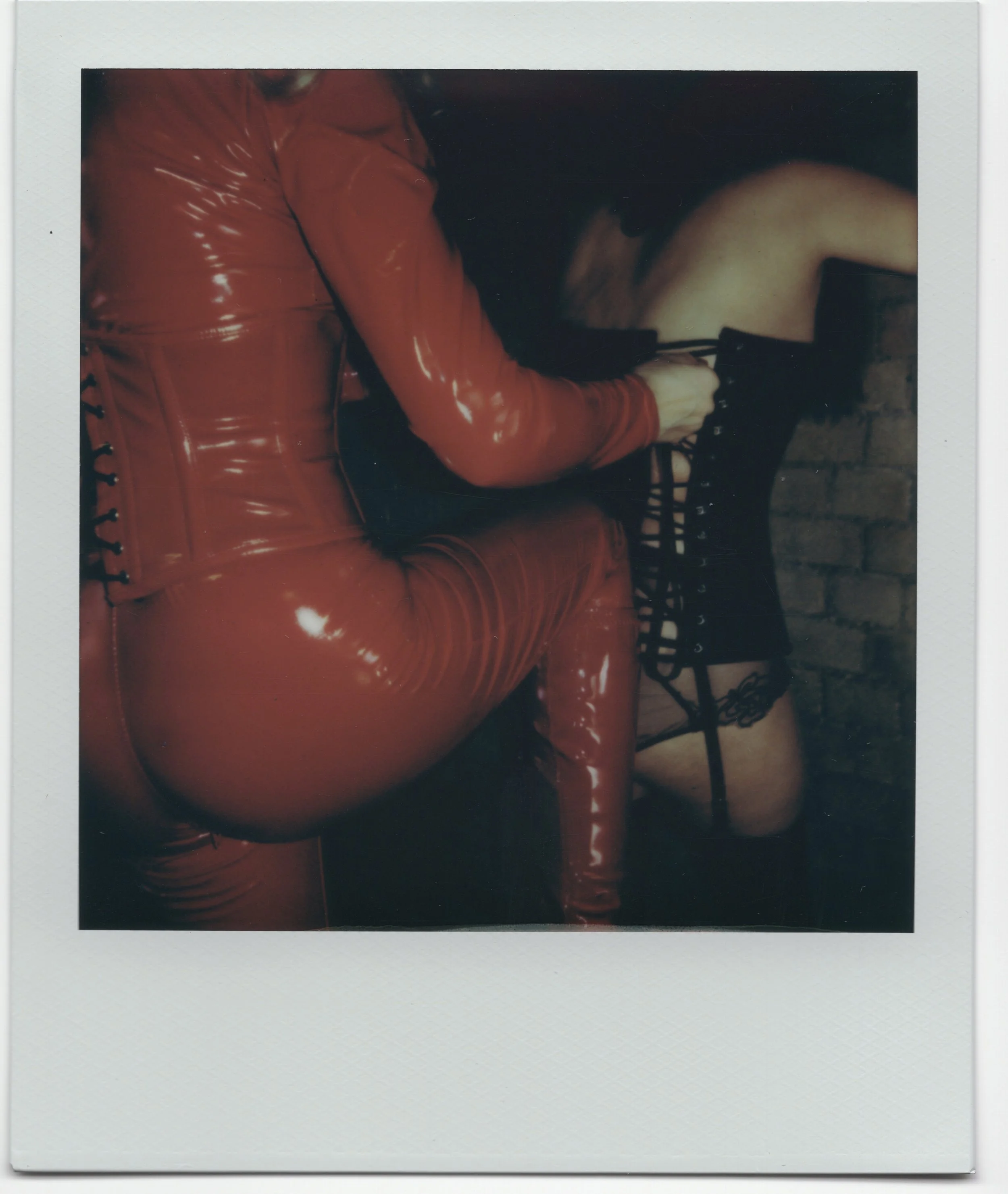
Halloween, kink, and the pleasure of being a little bit afraid
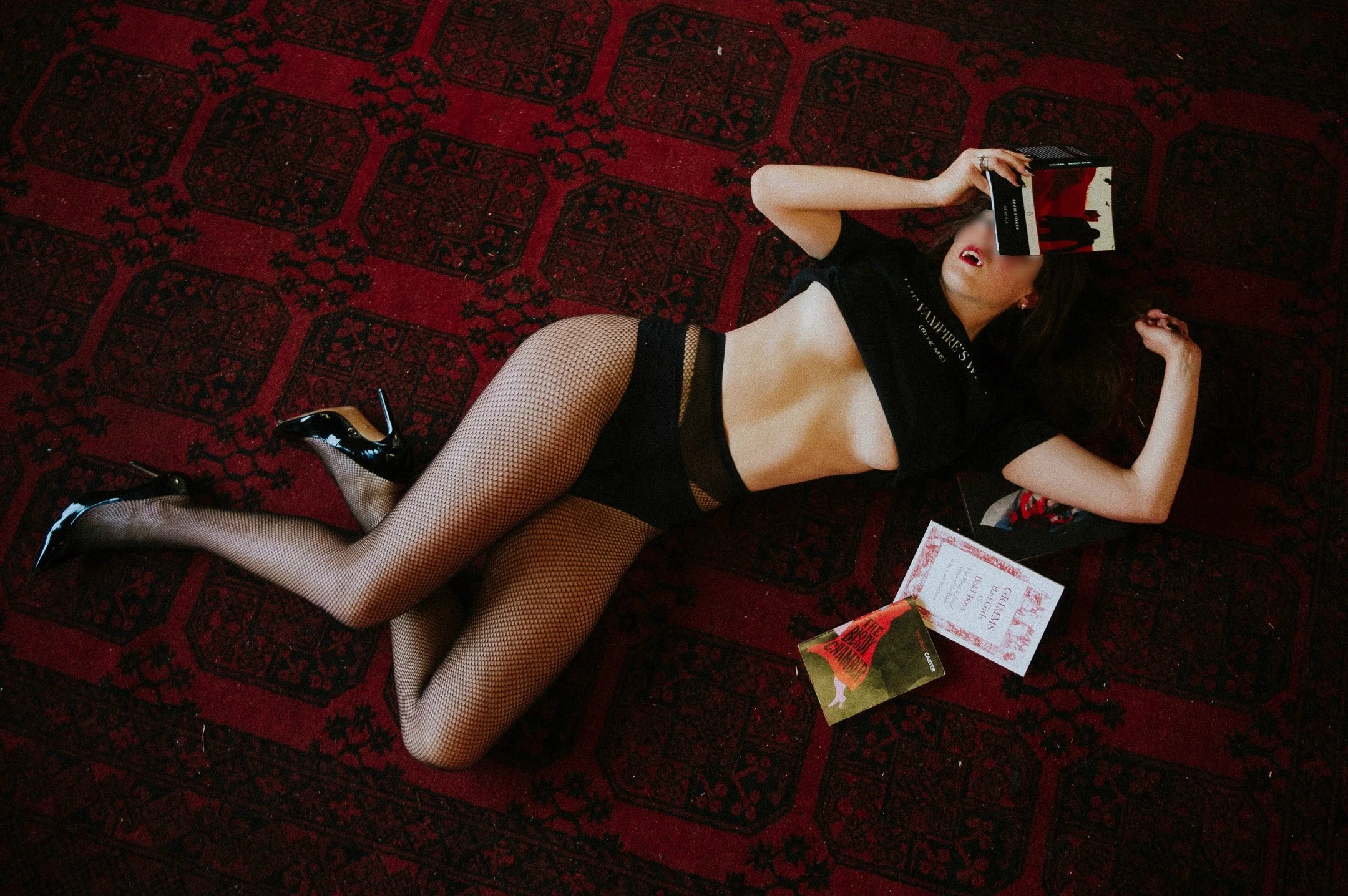
I have shed my headband, the curved plastic horns obstructing the fingers I compulsively run through my hair at parties like these. The rest of my costume, though, remains on. Sweat slicks the latex bodysuit to my skin, the chains circling my waist conveniently clipping to the tiny tail and batwings fashioned haphazardly to my back. This is a play party I’m familiar with, but the mood tonight is different. Eyes that usually linger appreciatively on my body as I move through the club-lit darkness snap straight to my face, lock eyes with mine, a chemical mix of arousal and something else materialising on contact. I realise that ‘other’ is something like fear, and I remember abruptly that I am wearing white contact lenses. My succubus costume (entirely appropriate to the point of cliche at a sex party) is edging me dangerously into the animal part of the human psyche that says “no, unnatural, we don’t like this, run.” Spoiler alert: I had some very hot sex that night.
There’s something about Halloween that feels inherently kinky to me. Not necessarily in the obvious sense, although there is that sense too. Halloween has always had a rather suspicious relationship with leather, latex, and an unreasonable amount of thigh-high footwear. Not that I’m not complaining, obviously, see above.
I mean something slightly more fundamental: the appeal of deliberately making yourself afraid, the sticky side of anticipation. Gothic horror and kink both take ordinary things — a dark room, a particular outfit, a strange house, a person who looks at you in a particular way — and give them an entirely different charge. Both are fascinated by the point at which fear becomes anticipation, and anticipation becomes excitement.
And both, importantly, involve playing with things that we’re normally encouraged to keep under control. The thematic venn diagram populated by sex and repression, power and obsession, inappropriately-used power tools and people making spectacularly questionable decisions in large old houses? Simply, dear reader, a circle.
Even the history of Halloween itself shares one of kink’s preoccupations: boundaries. Its roots are generally traced, at least in part, to Samhain, the Celtic festival marking the transition from harvest into winter. It was a liminal time of year, associated with the idea that the boundary between the living and the dead was unusually permeable. Bonfires, feasting and protective rituals helped people navigate the whole unsettling business.
Not to speculate that Halloween is secretly a fetish ritual — though that does sound like an excellent roleplay idea — but because there is something deeply human about deliberately stepping outside the ordinary for a while. We dress differently and we become someone else. We flirt with things that would feel much stranger in broad daylight on an ordinary Tuesday.
The word fetish itself has an unexpected history. It comes from the Portuguese feitiço, meaning something like a charm or magically powerful object. The term was later used in European writing about objects believed to possess supernatural or spiritual power before eventually acquiring its modern sexual meaning. There is something lovely in that original idea: an ordinary object becoming charged with extraordinary meaning. A garment. A material. A mask. A pair of boots. A ritual. A particular setting. Ordinary things can become extraordinary, talismanic. A thing to be revered or a thing to be feared.
And the interesting thing about fear, at least when it’s contained, is how quickly it becomes excitement. Your attention narrows. You become very aware of your body, your surroundings, the person next to you. There’s something primitive about it which demands presence entirely, which is exactly what makes kink compelling to me. I’ll spare you the TED talk about screens/productivity/optimisation, but we all know it’s very easy these days to be swept up somewhere else that isn’t here and now. I, and generally the people I’m most drawn to, relish any opportunity to be held in a moment so utterly that everything else goes away.
There’s another side to all this, too, something I’ve touched upon in the past as it pertains to cinema specifically. Horror nerds are obsessed with the distinction between terror and horror: the anticipation of something frightening being its own experience. The unseen thing, the possibility, the suggestion. Most of the time what you imagine is considerably more effective than anything an author, filmmaker or haunted-house employee could actually show you. And you know who else totally gets this? Kinky people.
Both groups, critically, also appreciate that there is a world of difference between being genuinely unsafe and feeling unsafe while knowing you aren’t. The former is a problem, while the latter can be rather exciting.
This is also why I think both horror and BDSM get away with being so theatrical. We all agree to the rules in advance. Tonight, the house is haunted. That person is a vampire. The blood is fake. The thing behind the door is probably an actor who has had to crouch there for six hours and is beginning to regret their career choices. The fear is real, but it’s framed, and framing matters because there’s something incredibly appealing about knowing exactly where the edges are. About being able to flirt with fear because you know you can step back from it. You can say no. You can laugh. You can turn the lights on.
So… treat?